Why Are Some Drugs Not Administered Orally? – Pharmacy Notes
Why Are Some Drugs Not Administered Orally?
The oral route of drug administration is one of the most commonly used routes because it is convenient, economical, painless, and easy for patients to use. Tablets, capsules, syrups, and oral solutions are widely used for the treatment and prevention of diseases.
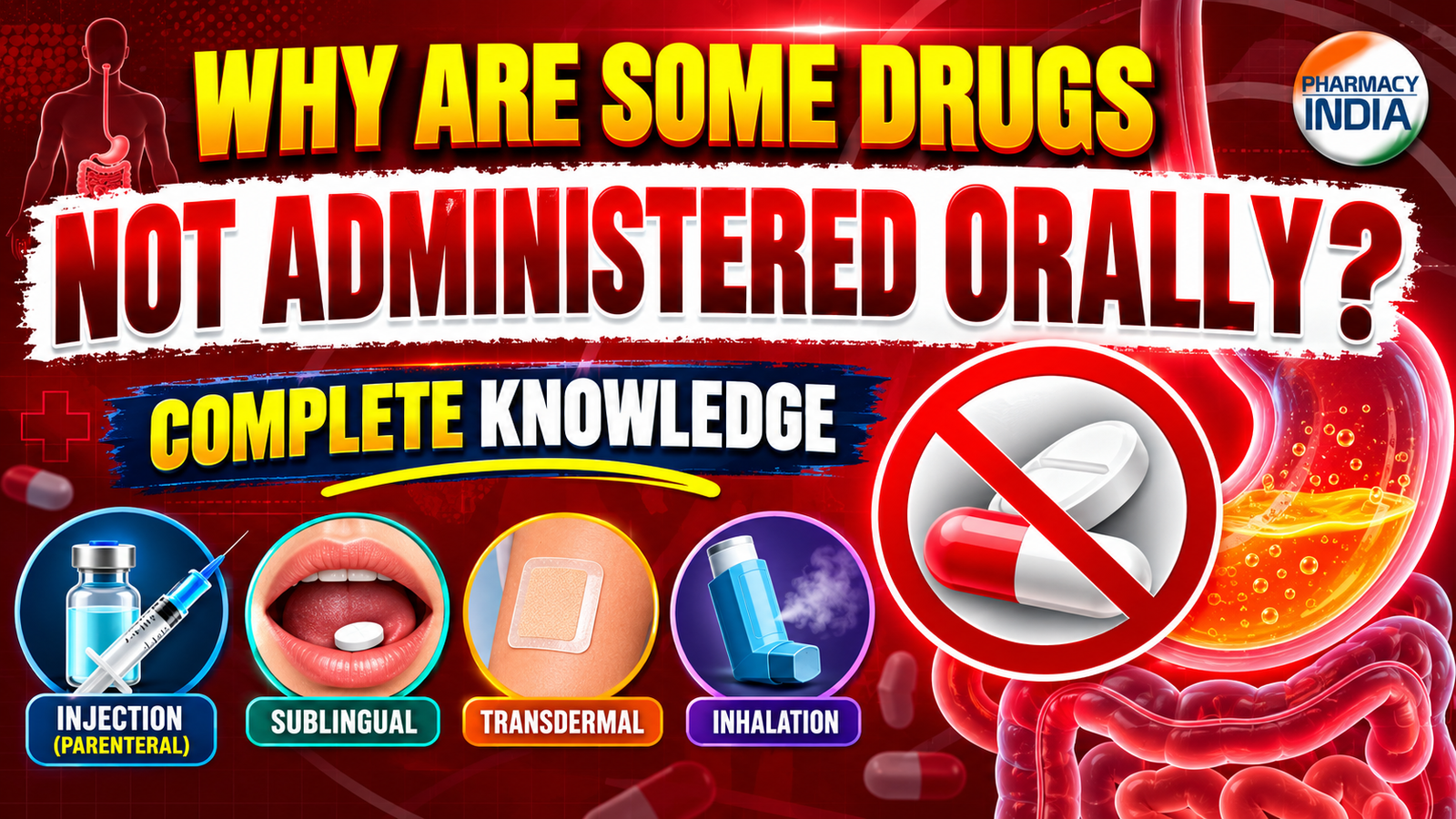
However, not every drug can be administered orally. Some medicines may be destroyed in the gastrointestinal tract, poorly absorbed from the intestine, extensively metabolized by the liver, or may require a much faster action than the oral route can provide.
Therefore, such drugs are administered through alternative routes such as intravenous, intramuscular, subcutaneous, sublingual, buccal, rectal, inhalational, transdermal, or topical routes.
For an oral drug to produce its desired systemic effect, it must remain sufficiently stable in the gastrointestinal tract, dissolve appropriately, cross the intestinal membrane, and survive metabolism before reaching the bloodstream. Any problem during these stages can make oral administration unsuitable.
Major Reasons Why Some Drugs Are Not Administered Orally
1. Drug Destruction by Gastric Acid
The stomach contains hydrochloric acid and has a highly acidic environment. Some drugs are chemically unstable under acidic conditions and may be degraded before they can be absorbed. If a significant amount of the drug is destroyed in the stomach, the required therapeutic concentration may never reach the bloodstream.
Example: Insulin Insulin is a peptide hormone. If taken orally, it can be degraded in the gastrointestinal tract and therefore does not reach the bloodstream in sufficient active form. For this reason, conventional insulin therapy is generally given by the subcutaneous route.
2. Destruction by Digestive Enzymes
The gastrointestinal tract contains various enzymes responsible for digesting proteins, carbohydrates, fats, and other substances. Protein- and peptide-based drugs can be recognized by these enzymes and broken down. This is an important limitation for many therapeutic molecules.
3. Poor Absorption from the Gastrointestinal Tract
A drug must cross the gastrointestinal membrane before it can enter the bloodstream. Some drugs:
Have very poor lipid solubility.
Are highly ionized.
Have a large molecular size.
Cannot easily cross biological membranes.
Have unfavorable physicochemical properties for intestinal absorption.
Example: Heparin Heparin is not effectively absorbed from the gastrointestinal tract and is administered by parenteral routes.
4. Extensive First-Pass Metabolism
After absorption from the gastrointestinal tract, orally administered drugs enter the portal circulation and pass through the liver before reaching the systemic circulation. The liver may metabolize a significant amount of the drug, leading to very low bioavailability.
Example: Nitroglycerin Nitroglycerin undergoes extensive first-pass metabolism when swallowed. For rapid relief of an acute angina attack, it is commonly administered by the sublingual route to bypass initial hepatic metabolism.
5. Need for Very Rapid Drug Action
Orally administered medicines usually require time for disintegration, dissolution, gastric emptying, and intestinal absorption. In emergency situations where a very rapid therapeutic effect is required, drugs are instead administered through intravenous, intramuscular, sublingual, or inhalational routes.
6. Drug Causes Severe Gastrointestinal Irritation
Some medicines may significantly irritate the gastrointestinal mucosa, causing nausea, vomiting, abdominal discomfort, or gastric irritation. In severe cases, an alternative route is selected.
7. Patient Is Unconscious or Experiencing Severe Vomiting
Oral administration requires the patient to be able to safely swallow. Attempting this with an unconscious patient increases the risk of aspiration. Similarly, a patient experiencing severe vomiting may expel the drug before adequate absorption occurs, leading to reduced therapeutic effects.
8. Difficulty in Swallowing (Dysphagia)
Patients with neurological disorders, esophageal disorders, elderly patients, or critically ill patients may suffer from dysphagia. Importantly, tablets or capsules should not automatically be crushed or opened, as some formulations are specifically designed to control drug release.
Drug absorption can be influenced by gastric emptying time, intestinal motility, gastrointestinal pH, presence of food, and other medicines. Two substances may bind together, alter gastric pH, or change motility, reducing absorption and making the oral route unpredictable.
Examples of Drugs Not Given by Conventional Oral Route
Drug
Major Reason for Avoiding Oral Route
Common Alternative Route
Insulin
Peptide degradation and poor gastrointestinal absorption
Subcutaneous
Heparin
Very poor gastrointestinal absorption
IV / Subcutaneous
Nitroglycerin (for acute angina)
Extensive first-pass metabolism and need for rapid action
Sublingual
Many peptide/protein drugs
Enzymatic degradation and poor membrane permeability
Parenteral or specialized routes
Oral Route vs Parenteral Route Comparison
Feature
Oral Route
Parenteral Route
Convenience
High
Lower
Pain
Usually painless
May cause pain
Cost
Usually lower
Usually higher
Sterility Required
Generally no
Yes
Speed of Action
Usually slower
Often faster
First-Pass Effect
May occur
Usually avoided
Absorption Variability
May be significant
Less for IV administration
Bioavailability
May be incomplete
IV = approximately 100%
How Do Pharmaceutical Scientists Improve Oral Drug Delivery?
Modern pharmaceutical technology can sometimes overcome problems associated with oral administration through:
Enteric Coating: Prevents drug release in the acidic stomach, allowing release in the intestine.
Modified-Release Formulations: Sustained-release, extended-release, or delayed-release tablets.
Protective Drug Delivery Systems & Prodrugs: Special carriers or chemical modifications to protect sensitive molecules.
Nanotechnology: Use of nanoparticles, lipid-based systems, and permeation enhancers.
Conclusion
The route of drug administration is selected according to the physicochemical properties of the drug, its pharmacokinetic characteristics, therapeutic purpose, required onset of action, formulation, and condition of the patient. Understanding why some drugs cannot be effectively administered orally is an essential part of pharmaceutics, pharmacology, pharmacokinetics, and clinical pharmacy.