Supreme Court Directs Centre to Form Committee to Curb Unethical Pharma Freebies
Pharmacy News | Healthcare Regulation
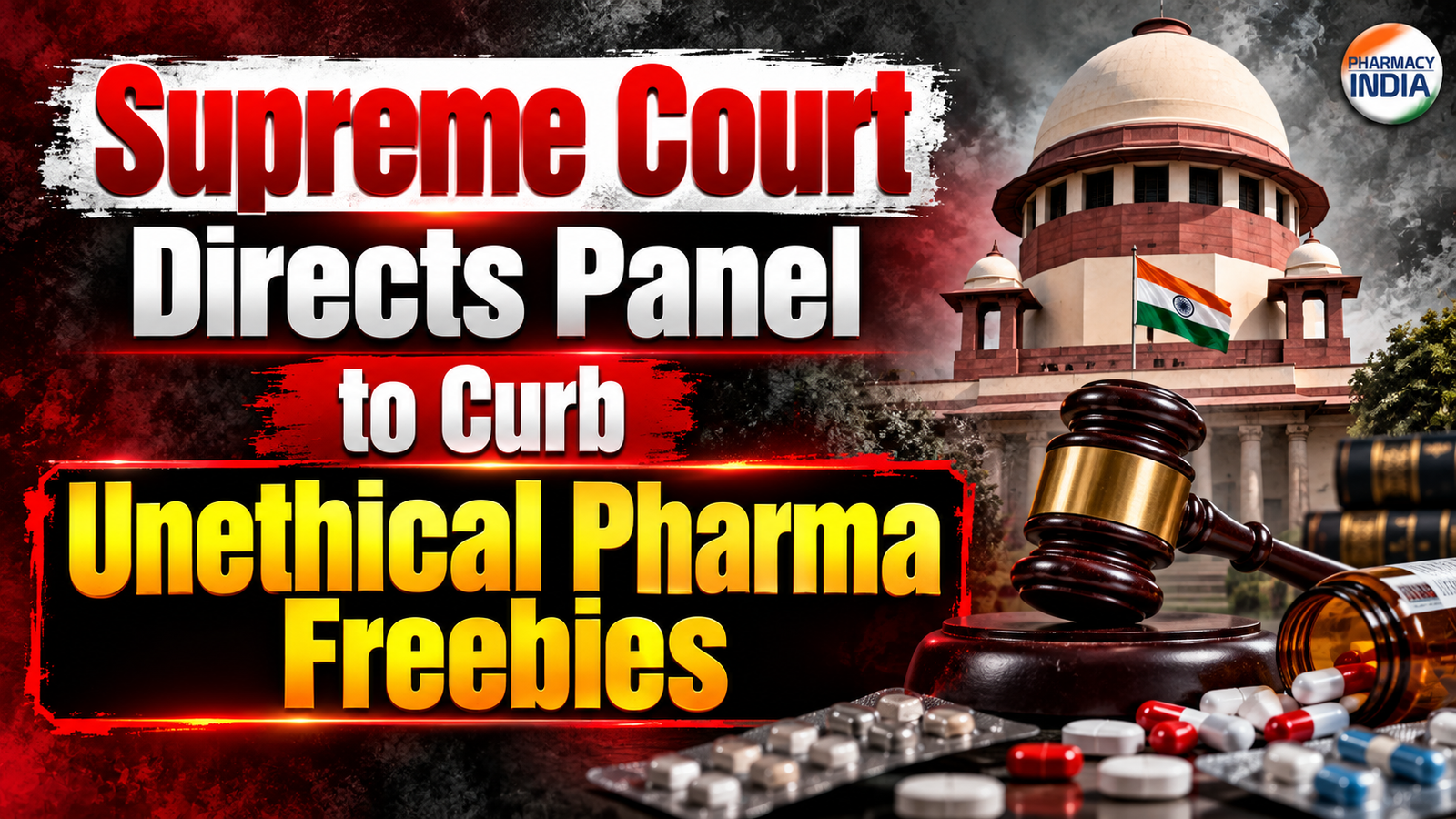
Supreme Court Directs Centre to Form Committee to Curb Unethical Pharma Freebies to Doctors
Short Information Summary
The Supreme Court of India has issued a landmark directive ordering the Central Government to establish a specialized committee. This committee is tasked with examining and curbing unethical pharmaceutical marketing practices, specifically the distribution of “freebies” (gifts, hospitality, travel) to doctors by drug manufacturers to influence medicine-prescribing decisions. This review will heavily impact the pharmaceutical industry, aiming to transition the current Uniform Code for Pharmaceutical Marketing Practices (UCPMP) 2024 into a more legally enforceable regulatory framework to ensure patient safety and rational medicine use.
Key Highlights of the Supreme Court’s Direction
Case Overview & Critical Deadlines
Date of Direction
October 8, 2026
Bench Members
Justices Vikram Nath and Sandeep Mehta
Background Litigation
Public Interest Litigation (PIL) filed by the Federation of Medical and Sales Representatives Associations of India.
Government’s Deadline
Within two weeks to constitute the committee.
Committee’s Deadline
Within two months of its first meeting to submit recommendations.
Existing Framework Status
The UCPMP 2024 remains fully operational during this review process.
Next Court Hearing
Scheduled for January 29, 2027, for further consideration.
What Are Pharma Freebies & The Core Concerns?
Interactions like scientific conferences and educational programs are legitimate. However, the core legal issue arises when commercial incentives compromise independent clinical judgement.
Types of Freebies
Clinical Consequences & Concerns Raised
Gifts and personal benefits
Sponsored travel and hospitality
Entertainment expenses
Direct or indirect monetary incentives
Irrational Prescribing: Medicines prescribed without adequate clinical justification.
Higher Treatment Costs: Patients directed to expensive branded drugs over affordable alternatives.
Unnecessary Medicine Use: Prescriptions exceeding therapeutic requirements.
Inappropriate Combinations: Promotion of drug combinations that lack clinical justification.
Antimicrobial Resistance (AMR): Inappropriate antibiotic prescriptions contributing to the spread of AMR.
Role and Objectives of the New Committee
Review Area
Committee Objectives & Responsibilities
1. Review of Existing Laws
Examine if current statutory provisions and industry codes (like UCPMP 2024) are sufficient to prevent unethical promotions and identify gaps requiring new legal measures.
2. Monitoring & Enforcement
Assess existing systems to effectively identify, investigate, and address violations. This includes regulatory oversight and complaint-handling procedures against pharma companies.
3. Transparency & Accountability
Strengthen transparency in doctor-pharma interactions, improve disclosure norms, and establish clear corporate responsibilities.
4. Statutory Recommendations
Recommend an appropriate statutory or regulatory mechanism (making rules legally enforceable rather than just voluntary industry codes).
Impact on Pharmacy Professionals, Doctors, and Patients
Stakeholders
Implications of a Stronger Regulatory Framework
Pharmacists
Highlights the vital importance of rational medicine use, ethical dispensing practices, and unbiased patient counselling based on safety profiles rather than commercial push.
Doctors / Prescribers
Reinforces the absolute need for independent clinical judgement. Prescribing must strictly adhere to the patient’s condition, clinical guidelines, safety, and drug affordability.
Patients (The Beneficiaries)
Improved Affordability: Access to clinically appropriate and cost-effective treatments.
Better Safety: Reduction in avoidable medication-related risks and adverse drug reactions.
Greater Trust: Increased public confidence in the healthcare system and prescribing decisions.
Step-by-Step Action Plan
Step
Action Detail
1. Committee Formation
Centre establishes the regulatory panel.
2. Stakeholder Consultation
Petitioners, industry experts, and intervenors present technical views.
3. Regulatory Review
Panel examines existing laws (UCPMP) and enforcement mechanisms.
4. Recommendations
Panel submits final report to the Central Government.
5. Government Decision & Reporting
Centre takes a reasoned decision and files a compliance affidavit before the Supreme Court ahead of the Jan 29, 2027 hearing.
This article is for informational and educational purposes for pharmacy students and professionals. Regulatory changes should be strictly assessed post official gazette publication.